Friday, July 15, 2011

What a fluke.

It's embarrassing to think that I haven't written in over two months! While I could write about everything that's been keeping me from detailing the grossest of the gross on here, that isn't the intent of this blog. So we'll skip all that and jump right into the realities of life...

Sometimes, people make choices that they probably shouldn't. Maybe its wearing a particularly ugly sweater (story of my life), or getting a bit-too-risky haircut that you immediately regret (story of my life up until I found my current hair stylist who is my personal deity). Maybe its agreeing to go on a date with someone with whom you know you aren't compatible (story of my college life). Maybe its deciding to eat that fourth (or sixth?) piece of cake. Maybe its eating that raw crab.

Wait...what?


First of all, ew! Secondly, let's get on to the point, shall we?

In the late 1800s, two tigers housed in the same European zoo died mysteriously. Weird... tigers are supposed to live forever, right? Well, researchers were baffled. What could kill a tiger, let alone two?? Upon performing autopsies on the majestic beings, researchers discovered a mass in the tigers' lungs. Was it cancer? Was it a booger? (I can just see the headlines: TIGER KILLED BY GIANT BOOGER). A few years later, people in Taiwan started to show similar lung booger infections, and that's when things started to get weird.


Paragonimus westermani, a lung fluke, is still rampantly infecting humans and animals alike to this day. These infections primarily occur in Asia, also recently in the United States, and are often linked to humans consuming raw seafood (particularly crustaceans).

Ok, so I exaggerated a little bit. P. westermani adults are typically the size of a jelly bean or a coffee bean, but they are hermaphroditic in the adult stage of the life cycle. Typically, you become infected with multiple metacerciaria (I like to call this the "teen" stage) which means you could develop a few ounces of jelly beans in your lungs! Fun!


Why is this a big deal? Well, these living boogers can kill you. P. westermani is a selfish parasite, that is basically just using your natural immune response to "spread it's seeds", so to speak. Once you've consumed that raw crab delicacy (say, Chinese Drunken Crab? or Eriocheir?), the intermediate stage of the lifecycle, or the metacerciaria penetrate through your diaphragm and into your lung tissue.


This is your lung with a friend.

There have been documented cases of P. westermani "getting lost" in the sea of your organs, and taking a wrong turn. Patients have been paralyzed by the flukes accidentally burrowing into their spinal cord. Other cases show that flukes can overshoot their target, and burrow their way into your heart, creating a decent sized fissure which can lead to heart failure or sudden death.

Once in your lungs, your body reacts. It says "I'd rather not breathe living boogers", and proceeds to try and flush out the invader with the initial immune response. Your lungs start to fill with fluids, and in severe cases of infection, this reaction can cause the lungs to collapse. Meanwhile, the P. westermani have been getting busy, creating eggs that irritate your lung tissues even further, causing you to cough severely. One of the first symptoms that people usually experience is violently coughing up blood.


While you are coughing up these eggs, you swallow to regain your composure...and now the eggs have traveled up your airway, and down into your GI tract. Here, they will be passed out with the rest of your waste, and move on to infect others (specifically if sanitation and plumbing are not state-of-the-art). Once the eggs hit a water source, they implant themselves in their vector, aquatic snails. After maturing, they then travel to inhabit crustaceans, and the cycle continues.

If you're a visual learner, here is an Animal Planet video from "Monsters Inside Me" that shows exactly what I just explained, but with poor computer graphics and a mildly attractive, yet nondescript  "biologist":


The onset of symptoms occurs approximately 30 days after ingesting the infected meat. If you think you are infected with a colony of lung flukes, the smart thing to do would be to see a doctor...or ask the internet (OMG am I dying!?!?). If not treated, P. westermani can live inside your lungs for up to 20 years! So, if you're having trouble finding a significant other to fill that void in your heart, maybe you should settle for a long term parasitic fluke infection.


I desperately wanted to show my true geek roots and call this post "Fluke, I am your father", but was advised against it. This is me, kicking a proverbial can down an empty street.

Tuesday, May 3, 2011

Leprosy: So hot right now.

It always fascinates me when outbreaks of infamous, yet rarely discussed diseases occur in localized areas. It's always the same reaction: a few people experience symptoms, scientists and medical professionals search to find the causative agent while news sources tell you "it must be in the air" or something else absurd. People freak out. They find the causative agent, everyone says "I knew it was that all along!" and then everyone forgets about it for another 100 years.

So, let's talk about this sudden burst of leprosy in the South.

Leprosy is a disease caused by a bacterial pathogen, Mycobacterium leprae. M. leprae is well known in the lab scene for being a pain in the labcoat to work with. It thrives at temperatures just under human body temperature, and has a doubling time of almost 2 weeks, where most other species double in a matter of hours.


The history of leprosy is really interesting. While art from 600 B.C. illustrate what appears to be the symptoms of leprosy, the actual bacterium itself wasn't isolated until 1873. Dr. Gerhard Henrik Armauer Hansen (say that 3 times and beetlejuice will appear) decided to name the disease after himself (Hansen's Disease), because his name wasn't sexy enough. But really, Dr. G. H. A. Hansen proved that science is the answer, because he dispelled the beliefs that leprosy was a curse from the heavens.

In the 1960s, the primary animal model was identified, and was found to be the only other reservoir, other than humans, for leprosy. Usually, animal models are mice, monkeys, and pigs, depending on the symptoms and effected tissues targeted by the suspect disease, but leprosy took a different turn. The only other reservoir for leprosy is armadillos.

Oh, hey!

Naturally occuring infection has been seen in some primate species, such as chimpanzees, mangabeys and macaques, but it is relatively rare compared to armadillos. It's estimated that 5% of armadillos in Louisiana have clinical leprosy.


Let me just backtrack a moment with a little anecdote:
When I told one of my best friends that I was going to write this entry, he was curious. Not only does he not have a biology background (he's a physicist, and I enjoy lovingly reminding him that he's not a real scientist (obviously joking)), but you don't really hear about leprosy every day. He's one of my favorite people because he genuinely shows a fascinated interest in the biological topics I bring up.

So, we got to talking about leprosy, and I was talking about how ridiculous it is that this study is just now being released, since scientists have openly known about armadillos being directly associated with leprosy since the 1960s. Sure, it's not within a doctor's scope of practice to know the historical information for every disease they encounter, but epidemiologists should have been able to trace the studies back to armadillos more efficiently. 

As we were discussing this, I was getting more and more riled up, as I do when I get excited about science (naturally). As I'm ranting about this, I pull up pictures of armadillos and suddenly announce:

"I mean, come on! How did they not know it was armadillos? The lepromatous leprosy lesions look just like the skin of an armadillo!"

...I'll admit, this was not my finest moment, nor my most scientific, as this statement is far from factual. But I was hyper, and I couldn't stop myself from ranting. He stopped me immediately after that statement and said "Now, Elysse, that was probably the least scientifically progressive statement I've ever heard from you. Are you feeling ok?" 

Now you have proof that I can be silly sometimes too. This is why I never go on dates.


Anyway, back to real science. Leprosy is alive and well in the Southern United States. 

While transmission is thought to be through contact with nasal secretions, these secretions must have a gateway into the body, whether through the nasal cavity or through an open wound. I'm sure you can imagine that it's pretty hard to get leprosy from an armadillo, unless you're rubbing it against your face, or it happens to sneeze while you're face-to-face with it, and you just so happen to be breathing in at that very moment for maximum transmission. Yet, this study that was just released is convinced that armadillos are the source, as a majority of the cases are in individuals who have never left the United States in their lifetime. My first thought would be direct transmission from infection armadillos in the "craft" industry. I'm sure you've all seen armadillo shows, wallets and handbags. But who knows, its just a guess. 

Don't worry about getting too worked up just yet. There are multidrug treatments for leprosy, depending on the stage in which you're diagnosed. Obviously, the sooner the better. Symptoms usually start off with numbness and the ability to be physically unaware of drastic temperature change in your limbs. There are many different stages of legions that can occur, and sometimes, an individual can be infected for months or years without showing characteristic legions.


Extreme cases of leprosy, or if the disease is left untreated, can result in crippling lesions that usually result in amputation. This is why treatment is urged, if available, as soon as diagnosis is confirmed. Unfortunately, a majority of the cases of leprosy, today, are in developing countries that have limited access to multidrug treatments for leprosy, and related symptoms.


While all of this is scary, researchers estimate that leprosy is not highly contagious, and that 95% of exposures do not result in disease.

"I'm going to kill you...once I get out of this bucket."


Wednesday, April 20, 2011

Staph: A Favorite.

Recently, one study went viral throughout different internet avenues: major news sites, food blogs and of course, facebook. This study illustrated the magnitude of contamination within the meat industry, specifically with Staphylococcus aureus, a common Staphylococcus spp. that has been labeled as multi-drug resistant. Basically, people are freaking out because, according to this study, over 25% of all meat is contaminated with Staphylococcus aureus.

...but guess what?

SO ARE YOU!

That's right. Pretty much everyone who has stepped out of their home has been exposed to, and has S. aureus on their skin. Staphylococcus spp. are even known to inhabit our noses! In 2003-2004, approximately 29% (78.9 million persons) and 1.5% (4.1 million persons) of the U.S. population was colonized in the nose with S. aureus and MRSA respectively. But, its important to remember that not all strains are multi-drug resistant, or MRSA. (Yea, MRSA. You've heard that before. Remember when MRSA was considered a gay-bacteria a few years ago because the media spread premature and uninformed stories?)


S. aureus is a facultative anaerobic, gram positive bacteria that causes a wide range of infections in humans. It can be involved with food poisoning as an enterotoxin, or within the skin. Very rarely is S. aureus found in the throat and, although almost a third of the US population has it in their nose, it hardly ever is pathogenic in that particular locale. For skin infections, S. aureus can cause anything from pimples to abscesses, and if it goes untreated, it can quickly progress to  pneumonia, meningitis, osteomyelitis, endocarditis, toxic shock syndrome, and sepsis!

 
My friends make fun of me for washing my feet every day when I get home, but THIS IS WHY!

In 2005, almost 86% of initial S. aureus infections hospital acquired. Unfortunately, it's a rather common situation for individuals recovering from surgery or major wounds. Also, S. aureus is a common cause for styes in the eye, especially when transferred from the nasal cavity. A few months ago, a small study was performed to analyze the cleanliness of BART seats, and the results showed colonies of MRSA, among lots of other fun things, inhabiting the fabric seats! So guess what's all over your favorite pair of jeans and that cute hoodie! It's no wonder every BART car I've ever been in has smelled like a giant fart!

Inviting! (photo cred: n1ko via Flickr)


Now, please note that all this information is not my way of saying "don't worry!" in response to the meat contamination. What I'm trying to say is that, well, I'm not surprised

I'd like to give you tips on how to avoid such bacteria, but to be honest, your attempts would be relatively futile, considering how widespread S. aureus is, and how unsanitary our day-to-day habits are. I mean, when is the last time you sanitized your computer keyboard, or your cell phone? Do your jeans often touch the same surface as your head and face, such as a pillow or a couch? Are you touching your face right now?!

Remember when you only had to be worried about cooties?


Sidenote: I've been asked to occasionally submit some pieces to Vegansaurus, a bay area vegan blog. I highly suggest you check it out, and also, let me know if there's anything you'd be interested in seeing me write about for Vegansaurus.

Friday, March 25, 2011

Tick-magnet

I've just returned from the East Coast where spring seems to be arriving faster than on the West Coast. I was welcomed with 65-70 degree Fahrenheit weather for the beginning of my stay, while the Bay Area was being pummeled with rain, hail and thunder. I think it's appropriate if I take at least some of the credit for the sunny weather that followed me across the country, don't you?

I was staying in a house with a few animals, one of which was an adorable dog named Mable. Check this babe out:

Photo Credits: Mary Jane Photography // March, 2011

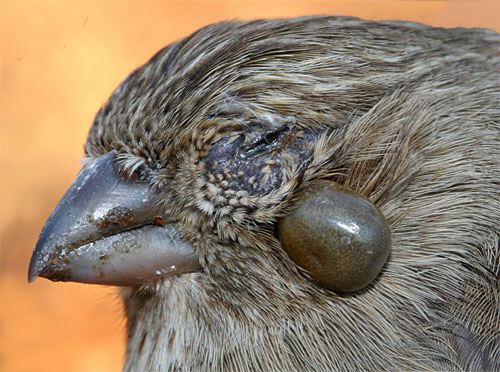
Mable and I instantly bonded over a shared experience: Ixodoidea (ticks of the hard variety). We've all had one attached to us at one point in our lives, unless you live in a bubble. Mine was in elementary school on a hiking trip. My mom found it attached to the back of my neck, just below my nape, and proceeded to freak out about lyme disease. I ended up fine, as always. Luck of the draw, I suppose. 

Tick on a Chick.


Since the weather is starting to warm up a bit in Pennsylvania, ticks are out on the prowl. Poor Mable has experienced a few in the last few weeks, specifically two on the day that I arrived. Now, I happen to have a talent for finding ticks and such on people and animals. Is it a talent? a gift? a ticks-sense? Whatever it is, I've mastered it, and was able to find two on Mable within 10 minutes of being in her house. What a way to meet someone! 

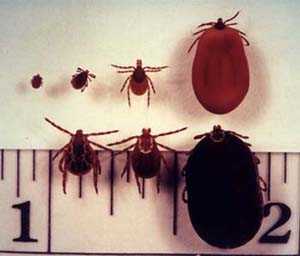
 Deer Ticks (Ixodes scapularis) shown fully engorged with blood on the right.


The next day, we relaxed together, enjoying the 70 degree Fahrenheit weather in shorts (...me, not Mable.), laying on the giant trampoline in the backyard and going on a few walks to pass the time. As I lay on the giant trampoline (so comfy! who would have thought?), I pondered the parasitic prey that varied from coast to coast. Are ticks worth an entry on the ol' blog, or are they old news? I mean, they're practically everywhere, varying with geographically specific species (over 900 species, to be exact!). Yet, I got really excited when I read about the recent coverage of ticks in China (Mable, we're not alone!).

Apparently, a new virus has been isolated, and is associated with tick bites.  The new virus, termed SFTSV, which stands for Severe Fever with Thrombocytopenia Syndrome bunyaVirus (a stupid name, in my opinion) was discovered via isolation after filtration of the infected patients' blood samples. Ticks are symbiotically  associated with bacteria that can cause many problems and illnesses with humans (example: Lyme Disease), so researchers naturally had their sights set on something much larger than their actual viral cause. 


The virus, isolated in over 170 patients in China, has shown relation to the viral family Bunyaviridae, which is a class V virus on the Baltimore Classification Scale. This classification indicates that the virus is a negative strand RNA virus, much like it's genus-brothers Hantavirus, Nairovirus, Orthobunyavirus, Phlebovirus, and Tospovirus. 

The fun thing about Bunyaviruses that infect humans (as they are usually found in rodents and arthropods, hence the cute little vector!) is that when they do, they are usually super deadly! SFTSV has been associated with a relatively high mortality rate, causing death in 30 percent of initial reports. Later, the percentage was lowered to only 12 percent ("oh, I guess this one isn't really dead!"). The reason for the high mortality rate is that humans usually experience major organ failure, extreme fevers and/or hemorrhagic fevers (meaning, your insides can start melting and leaking out of your orifices). SFTSV has caused major gastrointestinal problems and organ failure in many of the cases seen in China.

Scientists have stated that humans are a "dead end", as in, the SFTSV will only spread through tick-transmission, not through human-to-human contact or aerosolization. This makes sense, since they've only seen this in people that had confirmed tick bites, meaning the initial infection is assumed to be through a blood meal, but I'm sure they'll find that contact with infected fluids will also spread the virus.


So, get ready for those sunny days, and remember to check yourself thoroughly for ticks after being out in the wilderness. SFTSV has only been isolated in patients in China, but Lyme Disease has been found in many areas, so keep an eye out for symptoms of fatigue, fever and the characteristic rash:


Also, if you are interested, there are hundreds of videos on YouTube about how to remove a tick. One of the main things to remember is that you must remove the entire tick, including the head. If the head is left inside the wound, it could get infected.

 Mable wants you to think of all the people who are infected with SFTSV.


Friday, March 4, 2011

M is for March, and Maggots

I'm sure I don't need to start this by saying I haven't been purposefully neglecting this blog, I really am rather busy. Truly, honestly. But, since I feel so badly about not writing as regularly as I had hoped 3 months ago, I'll make it up by writing about one of my favorite subjects to talk about on a first (and usually last) date.

When you say "fly" to the average person, they usually think about the common house fly, or possibly a unicorn soaring elegantly over a pastel rainbow. Yet, when I think of flies, the first thing that pops into my head is the Botfly. Why? Because its disgusting and amazing.

Botflies are particularly special, because their larvae live as parasites during their development and maturation process. Why would you want to mature in the vast world of exposed nature when you have the opportunity to embed in the flesh of another living species?

Let's break down the amazing lifecycle of the botfly, because its rather unheard of for flies to deposit their eggs anywhere other than...well, you generally only hear of maggots and fly eggs/larvae around garbage cans and dead things, right? These flies are bold, and think that their larvae deserve a better environment than a trashcan. The female botfly, a large and dominating specimen, carries the eggs. She waits until she sees a suitable intermediate vector flying around a suitable host, such as a tick near a grazing animal or a mosquito that is preparing to feast on a human. Once the female botfly has chosen her target, she tackles the insect mid-flight. They begin to fall and roll, and as this happens, the female botfly deposits her eggs onto the intermediate vector and flies away.

I know, this sounds weird, and it definitely is, but the botfly species is smart for doing this. Most species recognize the large botfly as a threat, and will avoid any contact. Yet, if the eggs are disguised on another, much smaller species, then everyone wins!

So now, we've got the intermediate vector covered in eggs. It regains flight and goes after its bloodmeal (although, not all intermediate vectors for the botfly consume blood). When the intermediate vector lands on the mammalian host, the eggs are attracted to the heat, causing them to drop and land on the flesh of their new host. The intermediate vector takes a meal close to the location of the eggs, and they burrow towards the new opening in the flesh.

Once inside, they make their way to a comfortable area under the skin and develop for approximately 8 weeks. They survive subcutaneously by breathing through small tubes in their butt that open at the surface of the skin. These are visible, and will bubble if held underwater.

When the larvae is ready to emerge as a pupae and continue developing in the wild, it will burst from the flesh of it's host. If you can stomach it, here is a video:


Botfly larvae have a distinct "hook" mechanism that allows them to attach to the layers of the skin and avoid being pulled out. If you have a botfly infestation, they must be removed with minor surgery or suffocated before removal. You can see the hooks in these photos, they are clearly visible as the darker spots that form rings around the body.


And here is an awesome photo of a dead (suffocated) botfly larvae being removed from someone's head:


Botflies can be a large issue for small farms raising animals, and for stables holding horses. Also, if the wound is licked, possibly by the animal itself (we've all seen dogs lick their wounds), then the larvae can burrow in the intestinal tract and cause severe infections.


There are many different species of botflies, and they are found all over the world, including in the United States. Now that the weather is going to start warming, you can think of this every time you leave the house!

Happy Spring!

Sunday, February 20, 2011

Contest Winner!

As you may recall from the last entry, I received an email from a reader in the UK that was convinced she had discovered a tapeworm in her kitchen sink. After looking at the photos, I scripted an email to her, and then opened it up to the vast community of internet-based intellectuals. Contests ensued.

I got more entries than I had anticipated, but, actually, the first guess I had came only minutes after I had posted the initial photos and contest info.

So, congratulations to Jen S. from Oakland, CA!

If you were curious, here is the answer and the reasons I detailed for my decision:
To be honest, it doesn't really look like a tapeworm, and there are a few reasons for this:
  • Tapeworms are usually classified by the different shapes their "head" (more appropriately, scolex) because they use various hooks and suckers to attach to the gut wall. If you look at your worm's ends, there isn't a distinct sucker or any sort of texture that would indicate hooks.
  • Tapeworms segments are all little sacks of eggs and/or reproductive organs, depending on the species. They mature as they move away from the scolex, further down the worm. They get larger and more defined as they move down, too. This worm seems to have regularly sized segments all the way down.
  • The middle section that is a different color, see that? That resembles what most annelid groundworms have, called a "clitellum". Its usually much lighter in color, but that's the only thing I can think to compare it to. 
  • If this were a parasitic worm, it would not be a tapeworm, because they are generally flat, especially towards the ends that can break off. Most parasitic nematodes that take on the roundworm shape are not segmented, and most of them are too small to take up a large segment of a plate.  
  • Since you did put it in water, and it wriggled around, it was probably doing its best to get towards some air. Have you noticed that groundworms and snails like to come out during the rain? That's usually because the ground absorbs too much water. Their tunnels and burrows in the ground fill up, and they don't have access to the appropriate balance of oxygen and moist environments.
I think its safe to say that it is an Eisenia fetida, or a "Red Wriggler". They are used in composting (do you or your neighbors compost?), and can live in environments that are unnatural for most worms. They are found all over the UK. I think you, and your cats' backsides, will be totally fine.


Problem solved. Thanks, scientific reasoning!

Also, big thanks to everyone who entered their guesses.

Wednesday, January 19, 2011

Anonymous Worms Contest

I've received some rather interesting emails lately, now that the blog is starting to circulate a bit more (how that's happening, I'm not really sure!)

Before I tell you about the best email I've received yet, I'd like to briefly mention that I've won a "featured blog" award for a rather random site and received a rather awesome Follow Friday shout out on twitter from Nikon Small World Photography Competition. Weee!

This morning, however, I realized I had been neglecting my microscopic.blog@gmail.com account. Waiting for me, patiently, was an email from reader Denna from the UK. She writes:

Ok, I know I should let this go. Forget about it. But I can't; I am totally grossed out by what was in my sink this morning (attached). 

I assume it's some kinda tapeworm? But where the fricking hell did it come from? I keep a very clean kitchen. In fact there are those who think I'm obsessive compulsive about keeping the kitchen clean. I am a rigorous vegetarian and an almost vegan (no milk no cheese) and have been for twenty years. The only meat that ever enters my flat is in cat food tins, and I only buy one brand...

Denna details her morning about eating coffee and toast, and later going back for some oatmeal. As someone who can eat oatmeal for days on end, I like this girl already! Additionally, she's a borderline vegan who knows that its cruel to force house cats to acclimate to a vegetarian diet, as their species requires meat for survival. +100 points for Denna! She continues...

I placed the oatmeal pan in the sink to fill it with water and that's when I saw the tapeworm. There was water in the metal lipped dish from when I rinsed the cat food tin. I was gobsmacked. And I felt seriously sick imagining where it came from. The only place I can figure is the cat food tin. It was a newly opened tin - I popped the ring pull this morning - could a tapeworm survive in an anaerobic tin of food? I guess it could since they live inside animals. Ugh!! But wouldn't factory processing kill it? I kept the little bastard on my windowsill all day in the dish just to convince myself it was indeed a parasite. It must be - it didn't drown it just kept swimming round like some freaking miniature Loch Ness monster. There was a tiny bit of cat food in the dish and it knotted its lower half around the food while its head snorkelled around. Christ, honestly it was worse than imagining what was in that Maryland forest in the Blair Witch Project. Totally totally repellant. 
A few years ago, I camped in that same forest in Maryland where the Blair Witch Project was filmed -- no joke. It was very beautiful, and I'm sad to report that there were no witches, or tapeworms, to be found.
Finally around 5pm I picked the dish up and hurled the contents against the garden wall. The little bastard is probably out there now negotiating his way back into the kitchen. Or worse, he's waiting for one of my cats to go out there so he can crawl up their backside and introduce himself and his billion offspring into my flat.
Wrong type of worm, Denna. Tapeworms don't usually enter the anus... That would be characteristic of a pinworm, which exits its host's anus each evening to lay eggs on the perianal tissue (skin between the anus and genitals). But either way, its a fun image, right?! This is definitely not a pinworm...so what is it!?

So you're the expert - can you tell me what this is and how it might have got in my sink?! BTW, it was about 3 1/4 inches long. And red. And horrible, disgusting and gross. And I am never eating out of that yellow dish again. Seriously.

Dena said the magic words: "You're the expert". Heart a'flutter! I'm sure she wont like it when I mock her fear of eating off of the yellow dish by posting this video of Bear Grylls eating a giant larvae (beware, not for the weak-stomached or the faint-hearted). 
That man will put anything in his mouth, and drinks his own urine like its gatorade.

So why don't we play a little game? I've already responded to Denna Dearest, but I'm going to post the photos, and YOU see if you can identify who Denna's special friend is. 
The first person to get it right will get a super awesome & artsy/science-y prize!

Email your guesses to microscopic.blog@gmail.com and I'll announce the winner in my next entry!