Showing posts with label holiday. Show all posts

Tuesday, November 25, 2014

2014 Outbreaks: Plague Edition

This is the time of year where you are supposed to feel thankful for all the things you have in your life, whether its family, friends, stability, purpose, faith, or maybe even physical things. But, honestly, this year has been hard to feel truly thankful, scientifically speaking. There's been a lot of distrust, a lot of fear-mongering, and a lot of really terrible journalism that has made people (primarily Americans) really hate any scientist (or doctor, or medical professional) that isn't Neil DeGrasse Tyson. But guess what: we aren't lying to you, and we are doing the best we can to figure things out thoroughly and efficiently. Funding is at an all time low, support for major research is very political, and there is a surplus of newly graduated PhDs that aren't being utilized. Science is simultaneously really hard and really amazing right now.

Now that I've said all that, we can focus on what's happening right now in science: the plague.


You may remember learning about the bubonic plague in middle school, when your history classes were covering the middle ages, and it was the perfect time to talk about disease in science class (because let's face it, the middle ages were gross). I'm guessing you learned about it and immediately let yourself forget about it because you figured "well, that's over and done with so I'm safe."

Surprise! Approximately 40 people have died from the plague in Madagascar this month, and there have been approximately 120 cases reported.

But, look, this isn't shocking. In 2012, I even wrote about how there was a confirmed plague case in a rodent in Los Angeles. But, it is shocking in the sense that we haven't seen anything near "outbreak" proportions since the middle ages (and you have public health to thank for a majority of that!).

Yersinia pestis, the bacteria that causes the plague, is most often (not really often, per say) seen in animals, and is rarely transmitted to humans anymore. The middle ages were different, though. Animals (and fleas!) lived in very close quarters with families. Since hygiene wasn't really a fad yet, diseases like the plague would spread incredibly rapidly. In some countries, 50% of the population was wiped out.


There are three different forms/presentations of the plague:
  • Bubonic plague, which is transmitted by fleas and causes bulbous swelling ("buboes") around the lymph nodes
  • Pneumonic plague, which is respiratory, and spreads between humans via aerosolization and contact with fluids
  •  Septicemic plague, which is an infection of the blood
The bubonic plague can be treated with antibiotics, but pneumonic plague is incredibly deadly. In some incredibly severe cases, it can kill you after only 1 day of infection (not including the incubation period).
I am particularly nostalgic for the plague because it was the first real disease that caught my attention. Not only do I remember becoming completely infatuated with diseases, but I still have the report I wrote about the plague in 7th grade. Maybe if you really hope for it, I'll scan it and post it for you to laugh at. Tis the season for miracles, after all... right?

So, while you are sitting around, eating ridiculous amounts of food, try to be thankful for the advancements that have been made in science and health. If you have access to potable water and a waste treatment system, then you should be extra thankful. If you've had access to education, whether you've taken advantage of it or not (no judgement either way), then be overjoyed. Think of all the things that have changed since the middle ages, and be thankful.


Tuesday, February 7, 2012

Hearts A'flutter with Infection

I admit, I'm a total sucker for Valentine's Day. I'm pretty sure this has something to do with my childhood, since my mother's favorite holiday is Valentine's Day. She made it her mission to make Valentine's Day as big as Easter, right down to getting festive baskets full of heart-shaped candies and whatnot.

What I also love about it is the imagery. It's the one day of the year when mainstream culture romantically fetishizes an internal organ! How sexy is that?


Did you know that in one day, the force of your heart pumping causes your blood to travel approximately 12,000 miles? That's four times the distance across the United States, from one coast to the other.

The heart is an amazing organ. It's, quite literally, the lifeblood of your existence, pumping nutrients and oxygen to every bit of your body, working with the lymphatic system to circulate immune system cells, keeping you alert. But the heart is also a vulnerable place. Although we mostly hear about parasites of the GI tract, there are many other organisms that see our circulatory system as an all-you-can-eat buffet.

If you think about it, the circulatory system and heart provide the perfect environment: tons of nutrients (see: snacks), tons of oxygen, a comfortable temperature (like a sauna full of blood) and hardly any competition.Who wouldn't like that?

Since this is a post for Valentine's Day, I'd like to tell you about the best of the best. Please keep in mind that there are thousands of things that can find their way to your heart and eat you inside out. These are just some of the highlights.

Protozoan parasites:
Leishmaniasis is typically seen to affect the spleen, liver and bone marrow during a visceral infection (as opposed to the cutaneous infection that causes lesions and boils), but it can also find it's way to your heart and cause damage there. There are about 500,000 new cases of visceral leishmaniasis every year, but they are all dependent on the local sand fly population, which acts as the vector for the disease.


Visceral leishmaniasis results in the inflammation of the infected organs. If not treated, the swollen organs may become non-functioning, which can result in organ failure and death.


T. cruzi, the cause of Chagas Disease, has shown high cardiotropism that is unmatched by other parasitic organisms. This flaggelated protozoa has the ability to "swim" or move throughout your system.

Not a sea slug, but just as cute?
Once settled in a comfortable area (filling the void of your broken heart), your heart will begin to swell with the inflammatory response. After trying to kill off the invading organisms, cellular damage and fibrosis occurs, making the likelihood of heart failure very high.

This is your heart on Chagas Disease.


Worms and things:
Schistosomiasis, also known as Snail Fever, is a parasitic worm that causes a chronic condition in adults, and impairs cognitive development in children. Early stages of Schistosoma development, the immature worm feeds on red blood cells. While it mostly affects the liver, the worms occasionally can get turned around and burrow into the heart tissue. Schistosomiasis has a very low mortality rate, but is very devastating. 

D. immitis is the very well known "Heartworm". We mostly hear about heartworms in our pets, but they can definitely infest humans, albeit rarely. The heartworm doesn't become an adult until it has settled into the pulmonary artery. Before that, it's transmitted from host to host by it's vector, the mosquito.

Dog heart.

Echinococcosis happens to be one of my most favorite parasites. Echinococcosis infects mostly mammals, including humans, and is transmitted directly through the accidental consumption of a cyst or egg form. While mostly found in the liver, up to 25% of cases are found in organs like the heart, brain, kidneys and less commonly, lungs. But this worm is special. Echinococcosis is also known as hydatid disease, from the formation of hydatid cysts.

Hydatid cyst, single and ready to mingle.

The worm develops it's eggs into a collection of "egg sacs" or bubbles within a tissue. These sacs have multiple compartments of eggs, and have the ability to grow very large and very numerous. They are strong enough to survive the host's environment, but delicate enough to be very tricky to remove during surgery. If a cyst bursts, the patient can go into anaphylactic shock (similar to an appendix bursting).


On a sappy note, I started this blog almost 2 years ago because I needed an outlet. I was talking too much about the dangers of the world. My friends and family were tired of hearing about my research or the latest in disgusting discoveries (and still, my dad seems to be the biggest fan of my blog!). Even worse, I was ruining dates! You can always tell how the rest of the date is going to go when you mention that you may have been handling active HIV earlier that day in your lab, or you have volunteered your time to look at poop samples from the county. My favorite was the date that said, "I mean, I like nerdy girls, but I kinda just meant girls in glasses."

As of now, I'm miles ahead of where I was 2 years ago, both in my career and my life in general. To be honest, I never really thought that my life would involve any sort of writing, other than the to-the-point articles of my great discoveries in science (I say, as if I'm Marie Curie or Barbara McClintock). What I'm trying to get at with this uninteresting rant is THANK YOU, dear readers, for taking an interest in my low-bar jokes and nasty photos. I hope this blog has, and will continue to, help you as much as it has helped me.

Happy Valentine's Day!

Monday, October 31, 2011

Ghosts, Goblins & Things That Will Actually Kill You

I love Halloween, which is why I'm sitting at home alone, wearing my festive ghost-print pajama pants, tea in hand, writing this blog entry. As I sit here, eating my unfestive leftovers and unexciting salad, I'm laughing to myself. NPR is posting ghost stories, Buzzfeed posted "10 creepy photos from Halloweens Past", and articles like "13 Real Animals Lifted Directly Out of Your Nightmares" [cracked.com] are actively being read.

So, I'm giggling to myself, pushing my food around in the bowl thinking, "how can I write a blog entry about things that are already halloween-esque?" This is a challenge for me, because I am not a fan of horror films. I know, you'd think someone who dedicates their life to viruses, parasites, and other creepy crawlies would be excited by the thought of paying $12 to go watch two hours of ghouls and scantily-clad ladies screaming... but I'm not.

Then I found this list of the 10 Scariest Horror Movie Characters (also on Buzzfeed, which is oddly addicting if you avoid all the celebrity gossip and pseudo health advice). While I have only seen one of these movies, I think I can match all of these horror movie characters with real horror. So here we go...

1. Exorcist Girl? Ebola


Sure, I haven't seen this movie, but I can recognize all the references from pea soup to spinning heads. There are parasites that take over their hosts' brain functions, but that's mostly seen in smaller animal models or with prion diseases (which are not parasites). Want to read about Ebola? Check out one of my past entry here.


2. Leatherface?  Leprosy.


 Leprosy is a really unfortunate infection that is fortunately curable when discovered early. Read up on it here.


3. Creepy Girl from Quarantine?  Hookworms.


Nothing says sexy like gnashing teeth.


4. Jason Vorheese?  Primary Amoebic Meningoencephalitis


Both Jason and Primary Amoebic Meningoencephalitis are found lurking in lakes and pools of water, and both will make you crazy. 


5. Old Man from The Unborn? Hobo Spiders.

My partner called my attention to these baby hand-sized wonders. Apparently, he used to wake up to them crawling on his chest, and the males also are very territorial and will charge at you and chase you around a room.


6. Pennywise from It the Clown? Tapeworm.


Both Pennywise the Clown and tapeworms lives amongst poop and eat your insides. The similarities are uncanny! Read about fun tapeworms here!


7. Freddy Kruger?  Bedbugs.


 ...because they get you in your sleep! Here's an older post about bedbugs that will make you want to sleep with one eye open.


8. The Girl from the Ring? Onchocerciasis.


 Onchocerciasis is the clinical term for "River Blindness", which is a disease caused by an infectious roundworm. This one is a bit of a stretch, I know, but that girl has creepy eyes.


9. Michael Meyers?  MRSA.

One of the latest things in medical news is drug resistance. Much like Michael Meyers, MRSA just wont die!


10. Old lady from Legion? 


Three Words: Ellen Albertini Dow


Happy Halloween!

Sunday, April 4, 2010

Easter Infection


I had a difficult time deciding what to kick off my first blog entry with – there are so many viruses and parasites to choose from! Do I start with something basic and move onwards and upwards from there? Or do I jump right in with both feet and bombard my initial readers with my favorites?
But then I realized I should obviously go with a festive theme for Easter. I mean, that’s the logical thought, right?
Truth be told, the Easter bunny does become occasionally ill. Unfortunately, it’s usually with a brutally fatal virus: the myxoma virus.
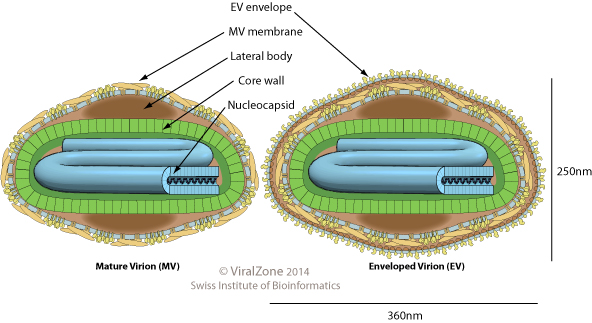
The myxoma virus is part of the poxviridae family, and is a class 1 virus within Baltimore Classification Standards. The myxomoa virus has an exterior envelope structure which encases the viral capsid and assists with viral entry to the host’s cell. This envelope structure contains many important glycoproteins that assist with entry through membrane fusion and location specific phagocytosis. Later on in the viral lifecycle, or the “infectivity cycle”, the viral envelope also assists with budding from the host’s cell for dissemination of newly matured virions. For all viruses, the viral genome is protected within the viral capsid. The myxoma virus utilizes a double stranded DNA genome that is non-segmented and linear.
 
The myxoma virus only seems to infect rabbits and hares due to components of their immune system that are easy to evade. It is not necessarily exclusive to one geographic region, although does have a higher infectivity in specific areas. High incidence rates have been reported in the UK, Australia, Egypt, France and South American (specifically Uruguay).  The South American incidents are typically not dangerous and illustrate a lower mortality rate than any other region affected. Common cottontail rabbits usually experience characteristic dermal tumors, yet European rabbits can experience severe myxomatosis. 

Symptoms of myxomatosis begin with tumors on the skin and genital areas. After spreading, the rabbits can experience blindness, fever and exhaustion. Due to the rabbit’s weakened state, secondary bacterial infections are very common and are habitually what cause the onset of the eventual death. This is usually due to swelling of the lung tissues and pneumonia. Myxomatosis is also associated with Rabbit Hemorrhagic Disease (RHD) which can cause the infected rabbit to become comatose and die. Death from  a myxoma infection can occur anywhere between 48 hours to 14 days after initial infection. 

Australia’s government decided to utilize the fatality of the myxoma virus to control the overwhelming rabbit population. Initial experiments for population control “successfully” reduced the rabbit population from 600 million rabbits to 100 million rabbits over the course of two years. I can’t imagine what wading through rabbit carcasses decorated with tumors would be like. I mean, 500 million is a lot of dead rabbits. 

The virus is spread through direct contact with infected rabbits, and also through insects that take blood meals, such as mosquitoes.  It’s still a pretty rampant problem, thanks to governmental abuse for population control, and has lead to the development of a vaccine for those who wish to keep pet rabbits.
So, don’t be alarmed if the Easter Bunny didn’t quite make it through his rounds of delivering baskets. You might be the lucky one that finds a lumpy rabbit carcass amongst your chocolate eggs.

As far as festive parasitic infections go, Iodamoeba butschlii takes the egg-shaped cake.
Iodamoeba butschlii, as you can see from the name, is an amoebic parasite. It does infect humans, but is considered mostly non-pathogenic. Generally, these little buddies reside in your large intestines and feast on the excess yeast in your system. Rarely do people experience symptoms, but if they do, it’s generally just mild diarrhea and stomach cramps.

 The festivity is in the structure of the parasite, not necessarily the function (I mean, nothing says Happy Easter like mild diarrhea and stomach cramps!). Iodamoeba butschlii is one of the smaller parasites, with an average cyst size of 10 µm. It has all the normal components of an amoebic parasite, such as a nucleus, endosomes, etc., yet can be easily diagnosed because of its abnormally large glycogen vacuole! Why am I so excited about this glycogen vacuole, you wonder? Well, it is the key to our festive riddle!
Scientists, being the witty and intelligent creatures that they are, decided that this glycogen vacuole paired with the ovoid shape of the cyst makes Iodamoeba butschlii look like an EASTER BASKET! Take a look for yourself:

Don't you just want to put all your eggs in that little basket? An Iodamoeba butschlii infection can be diagnosed through a fecal wet mount. Exciting!

So with that, watch out for excess rabbit carcasses and avoid eating focally contaminated food this Easter.
Happy bunny day!

p.s.-  Radiohead's Myxomatosis: