Saturday, November 13, 2010

Tis the season for Parasitic Infections!

Ah, the holiday season. It seems that this time of year has become synonymous with meat-laden tables. Meat buffets. Meat, meat and more meat. Each culture seems to have their meat of choice for holiday celebrations, too. Some people won't celebrate Thanksgiving unless there is a 5800 lb turkey in the middle of the table. For some, it's ham, lamb or even fish.

Meat is also one of the most expensive food items you can buy, so for some families, the holidays are a time to splurge. Sure, it's reasonable to get the biggest cut of lamb you've ever seen to feed your family of 6. For this post, let's focus on the up-and-coming Thanksgiving turkey.

Nearly 50 million turkeys are raised and slaughtered for Thanksgiving every year in the United States. Think about the magnitude of such an endeavor.


Depending on the size, socioeconomic status and number of workers employed, the average turkey farm can house 7,000 turkeys at once. It takes a ridiculous amount of farms to produce enough turkeys for slaughter in time for Thanksgiving!

Why am I telling you this? I know, this sounds like advocacy for animals (I could write for daaaaays about animal cruelty, trust me), but this is strictly a science blog, so I'm telling you this as a back story. Statistical purposes.

Once again, think of the magnitude of such an operation. Now, here is the important part: try to imagine the odds for contamination in such a magnitude. Who's to say you didn't buy the turkey carcass that was accidentally dropped on the kill-room floor, and quickly swooped up before anyone else would notice? Who's to say the person plucking the feathers out of your turkey had a hole in their glove and didn't wash their hands thoroughly enough before coming to work or after using the restroom? Who's to say accuracy isn't as accurate as efficiency to the slaughterhouse that your turkey is coming from? Who's to say that every bird has been checked for health? Is the farm your turkey is from relying on mass quantities of antibiotics and treatments to keep them safe?


When you finally get your bird home, how sure are you about the quality? What quality? No, I'm not talking about the tenderness of the flesh or the overall freshness. No, I'm not talking about the growth hormone-induced size of the thighs, wings and breast. 

We've all heard about Escherichia coli and other fun bacterial contamination agents that rampantly infect our food, but let's talk about some other of the fun things that could be living on, and in, your prized dinner selection:

Poultry:
Poultry are susceptible to many parasitic infections, internally and externally. 

External parasites, such as lice and mites, spread quickly in impacted battery farms, yet most of them are removed during the plucking and washing processes of slaughter. External parasites are more of an issue if you are raising, slaughtering and preparing your own birds in-house.


Internal Parasites:

Ascarids (Large Intestinal Roundworms) 

One of the most common parasitic roundworms of poultry, Ascaridia galli, occurs in chickens and turkeys. Adult worms are about one and a half to three inches long and can be seen easily with the naked eye. Heavily infected birds may show droopiness, emaciation and diarrhea. Yet, when you have thousands of birds to take care of...would you notice one droopy bird? I wonder, how easy would it be to identify a bird with diarrhea in a factory farm setting?


Chickens of three to four months of age show resistance to infection. Specimens of this parasite are found occasionally in eggs. The worm apparently wanders from the intestine up the oviduct and is included in the egg contents as the egg in being formed.

The parasitic females lay thick heavy-shelled eggs in the intestine that pass in the feces. Embryonated eggs are very hardy and under laboratory conditions may live for two years. Under ordinary conditions, however, few probably live more than one year. Disinfectants and other cleaning agents do not kill eggs under farm conditions. Birds become infected by eating eggs that have reached the infective stage. The parasite can be controlled by strict sanitation.

 I don't know about you, but the words "strict sanitation" always make me think of poultry farms.


Ascaridia can infect other species of animals as well, including humans. Affectionately called "giant intestinal roundworms", A. lumbricoides is the most common infection of roundworm in humans. The intestinal phase causes malnourishment, intestinal blockage, verminous intoxication. It will also move around in the body in response to chemotherapy or fever. A worm with climate sensitivity, how posh!


They can also live in your lungs, which I would imagine would be... fun. In the lung it causes hemorrhage, inflammation, bacterial infection and allergy in areas with seasonal transmission. I can only imagine having seasonal transmission being a common thing in your area. "Hey boss, I can't come into work today because I've got that pesky lungworm thing that's going around now. I'm sure I'll feel better tomorrow."

I feel like this photo should be submitted to awkwardfamilyphotos.com.


Heterakis gallinae (Cecal Worms)
Heterakis gallinae is found in the ceca of chickens, turkeys and other birds. This parasite apparently does not seriously affect the health of the bird. At least no marked symptoms or pathology can be blamed on its presence. Its main importance is that it has been incriminated as a vector of Histomonas meleagridis, the agent that causes blackhead. This protozoan parasite apparently is carried in the cecal worm egg and is transmitted from bird to bird through this egg. The eggs of the parasite are very resistant to environmental conditions and will remain viable for long periods.


Capillaria (Capillary or Thread Worms)
There are several species of Capillaria that occur in poultry. Capillaria annulata and Capillaria contorta occur in the crop and esophagus. These may cause thickening and inflammation of the mucosa.

Capillaria obsignata is the most prevalent in the lower intestinal tract. The life cycle of this parasite is direct: The adult worms may be embedded in the lining of the intestine. The eggs are laid and passed in the droppings. The eggs are infective to any other poultry that may eat them. The parasites frequently produce severe inflammation and sometimes cause hemorrhage. Brutal erosion of the intestinal lining may result in death. If present in large numbers, these parasites are usually easy to find at necropsy. 

Capillaria are pretty easy to spread to humans, especially in the farm environment. Once again, sanitation is the key factor...


Tapeworms
Tapeworms or cestodes are flattened, ribbon-shaped worms composed of numerous segments or division.  The head or anterior end is much smaller than the rest of the body to assist with anchoring.

All poultry tapeworms spend part of their lives in intermediate hosts, and birds become infected by eating the intermediate hosts. These hosts include snails, slugs, beetles, ants, grasshoppers, earthworms, houseflies and others. The intermediate host becomes infected by eating the eggs of tapeworms that are passed in the bird feces.


Tapeworms can definitely infect humans. Some people live for years without knowing that they have a giant worm housed in their intestines, whereas others have an allergic reaction within about a week. Most infections are specific to mammals or poultry. It is more common to get a tapeworm infection from consuming or working around cows, sheep, pigs or dogs than it is from poultry, but a lot of family farms contain multiple types of animals in one small area. Think about it.

 Yes, this is obviously a good idea.

For mammalian-infecting tapeworms, the scolex (or "head") of the worm is adorned with a series of hooks and suckers to effectively anchor itself into the intestinal wall. Poultry tapeworms work in a similar fashion, but have a different scolex shape and pattern.


Syngamus trachea (Gapeworms)
The gapeworm is a round red worm that attach to the trachea (windpipe) of birds and causes the disease referred to as "gapes". The term describes the open-mouth breathing characteristic of gapeworm-infected birds. Heavily infected birds usually emit a grunting sound because of the difficulty in breathing and many die from suffocation. The life cycle of the gapeworm is similar to that of the cecal worm. Gapeworms infect chickens, turkeys, guinea fowl, pheasants, chukar partridge, and other birds.


The worms can easily block the trachea, so they are particularly harmful to young birds. The gapeworm is sometimes designated as the "red-worm"; or "forked-worm" because of its red color and because the male and female are joined in permanent copulation. They appear like the letter Y. The female is the larger of the two, as is pretty normal for a lot of insecta and helminth species. Both sexes attach to the lining of the trachea with their mouthparts. Sufficient numbers may accumulate in the trachea to hinder air passage. Choked to death by a worm orgy...


So, let's recap:
  • Poultry are raised and slaughtered typically in unsanitary conditions, causing unnecessary spread of many fun infective agents, most of which can be transferred to humans. 
  •  Since the holidays are nearing, millions of turkeys and other poultry will be slaughtered in mass quantities. Supply and demand means that time and efficiency is the highest priority for the industry. 
  • I'm sure many of the above photos grossed you out.
 If you're an avid reader of Under the Microscope, you know its not typically my M.O. to throw a disease or health problem in your face without presenting a solution. Here are some ways you can effectively avoid zoonotic transmission of infection:
  • Pay attention to the source of your dinner. Has your bird been raised "free-range" (*cough* yeah, right  *cough*) or in a battery farm? Has your bird been pumped full of antibiotics, growth hormones or other dietary treatments? All of that will be transferred to your body during consumption, to some degree.
  • Learn about the origin of your family's traditional meat consumption. Is it really a tradition, or just a habit at this point? Is it really that important for you to uphold the years of excess meat consumption, or is it time for a healthier, safer change?
  • Think about starting a new tradition. Sure, everything you get from a mass-produced source, like the grocery store, has a higher likelihood of having contamination of some sort, whether its meat, dairy or vegetables. But! The probability of contamination through vegetable and grain sources is much lower than that of meat preparation. 
 Some of my favorite recipes have come from vegetarian and vegan blogs. A few of my favorites are:
Try something new, healthy (and cruelty free) this year!
 

Sunday, October 24, 2010

Love in the time of Haiti


Ahh, Cholera, what an interesting history you have. Such a small bacterium can definitely grouped in with the most historically significant pathogens in the history of humans. And, although we've figured you out, you still never cease to infect us.

If you aren't hip to reading news, or science/health news specifically, then you probably aren't aware of the fact that Cholera is ripping through Haiti's rural towns and has made it to the capital. This is important, for historical reasons...and because Cholera kills 100,000 to 120,000 people every year.

Lets take a little trip through the pathogenic history of Vibrio cholerae.

1816 - 1826: The first recorded outbreak and epidemic of Cholera struck Bengal and spread through China, Indonesia and the Caspian Sea with British troops. It is estimated that 15 million people died during the ten year tour of Cholera.

1829 - 1851: Russia, Hungary, London and Paris are all affected. Scientists scrambled to figure out the method of transmission of Cholera, while mass hysteria hit the major cities. The media coined the term "King Cholera" (which is of the same caliber as calling H1N1 "Swine Flu", in my opinion). 


This was a specifically crucial time in the development of Epidemiology. Many scientists were throwing out disease theories in hopes that one would stick. William Farr proposed the Miasmatic Theory of Disease, suspecting that Cholera was spread through "bad air" or "poisonous air".

Sorry, William Farr, you were wrong. But, many grim, black metal-esque illustrations were created to emphasize the false truth of this theory.

 Remember, at this time in history, faith-based disease theory and healing were still alive and widely believed. If it wasn't the deadly diarrhea that scared you, then the giant Cholera spirit surely would.

I shouldn't admit that I was tempted to make an AC/DC reference as the caption for that photo...

Anyway, John Snow, a British physician, took the cake with his theory on the spread of Cholera in 1854. Snow discovered that Cholera was being spread through use of contaminated water pumps that were being sourced from a well that was only 3 feet away from a cesspit. He discovered this by going door to door and surveying the people about their symptoms, and the source of their water. People actually told him that the pump that was, unknowingly, contaminating everyone was the source of the best water in town. 

...maybe it was the added benefit of a gram negative bacterium.


 Following the UK and Europe's Cholera outbreak, the bacterium spread throughout Asia, Africa and South America. There have been outbreaks in North America, but nowhere as severe and widespread as those in Africa and South America. 

So this brings us back to Haiti. Ten months ago, Haiti endured a 7.0 magnitude earthquake that left 1,000,000 people homeless. Most of these people have used any resources available to create a "tent cities" (Haitian hooverville?) throughout Haiti, yet mostly centered near Port-au-Prince. Earthquakes, obviously, affect sewage and sanitation, so it was really only a matter of time before we heard about an outbreak of Giardiasis or Cholera. On top of that, 230,000 people died during the earthquake and subsequent aftershocks. Now, Haitians must live amongst ruined sanitation efforts and mass graves.


Over 200 people have died from Cholera in Haiti in this latest outbreak. Cholera can kill its victims pretty quickly if not treated adequately. There is typically a period of 2-15 days between infection and symptoms. Most people that are infected with Vibrio cholerae experience terrible fits of diarrhea, fever, sometimes vomiting, and extreme dehydration.

Approximately 80% of illnesses in developing countries can be attributed to their poor sanitation and lack of adequate water sources. There are non-profit organizations that are working to address this issue. Many organizations have attempted to give aid and develop programs to bring clean, safe water to communities in need, but have failed to realize that they need to focus on the sustainability of the project, as well. How feasible is it for these communities to maintain the project after relief and aid efforts have left the area? Where is the money going, exactly? What are the needs for upkeep and use of the project?

If you are thinking about donating to an organization that addresses water issues, make sure you read up on the sustainability of their program. The Water Project has emphasized the sustainability of their program, and it seems like a reasonable effort.  You can check out their completed projects here.


Thursday, September 9, 2010

Let's be honest...

Yes, let's. I didn't really want to have to touch on this issue, because I didn't want to risk putting my personal views on "hot topics" out there. That's not the purpose of this blog. Yet, I did decide that it might be helpful if I made a guide to some things that are being thrown around and actively banned.


Embryonic Stem Cells 
Do you really understand what happens? How they are used? Where they come from?
Really, without understanding the basics, I think its hard to form an opinion. Most news stories don't dabble into the real science of it, so where else are you going to get this information?

So, let's jump right into it.

What are Embryonic Stem Cells, anyway?
 Embryonic Stem Cells (also called "Early Stem Cells" or ESCs) are totipotent stem cells, meaning they have the ability to develop into just about any type of cell in our bodies. See, each cell needs to be specific to what its working to do. Nerve cells need to be specific to sending and receiving signals, heart cells need to be specific to beating (and skipping beats, if you're feeling fancy), and so on. It's kind of like how people go to school to become specialized for their careers. You wouldn't want a gourmet chef working on your car, a veterinarian building your house, or a vegan cooking you a honey-baked ham, right? I guess that's...a silly analogy, but stick with me.

These totipotent cells come specifically from the fusion of germ cells which, if allowed to develop in the right conditions, will turn into an embryo and eventually go through the basic cycles of human development. You can see this occurring in the following video from HHMI:


In the video, at around time 00:50, you can see a very important structure being formed: The Blastocyst. I'm sure you've heard of the cell multiplying over and over again, but at this point, the cells divide into two very important classifications: the "structural" cells that assist the embryo in developing, and the Inner Cell Mass (ICM). The outer cells that form the structural components create things like the placenta, and assist with attachment to the endometrium that lines the inner most layers of the uterus. These outer cells form the hollow ball structure of the blastocyst, as seen below.


 As you can see, these blastocysts are pretty tiny... no where near the size of a full fetus yet.


The ICM actively develops into the mammal, if conditions are appropriate. The cells that make up the ICM are totipotent as the blastocyst is developing and implanting. These are the cells that are harvested for Stem Cell Research.

I've heard people say that stem cells come from abortions. I've heard people say that doctors are stealing the unused, frozen embryos or egg cells from In Vitro Fertilization (IVF) procedures and storage for research. I've heard people say that stem cells used for to research medical treatment for serious diseases will eventually create mutant humans.

None of those people were doctors, scientists, or...educated in human development whatsoever.


Actually, what happens is this:

Everyone involved (ie- the people the cells are harvested from) are informed completely and given the option to have their germ cells used for research purposes. This usually happens if a couple opts for IVF treatments if they cannot get pregnant through "natural causes", or if they are trying to obtain pregnancy through a surrogate party. In this case, they never just fertilize and store (deep freeze) just one. IVF is a very tricky procedure that can take many, many tries for an actual success.


Now, there are actually other ways to harvest stem cells for treatments, but the cells will not be totipotent. Pluripotent and multipotent cells have more specificity due to the advancement of their differentiation within the body. An example of pluripotent stem cells would be those from an organ system: they are more specific in overall function  than totipotent stem cells, but still have the ability to further differentiate to a more specific cell type/function within the organ system.To harvest pluripotent and multipotent stem cells, blastocystic cells do not have to be used. In some instances, they can be harvested from adults and even from the patient themselves (depending on the treatment method and type of cells harvested). In fact, some procedures are being done to harvest mesenchymal stem cells from human teeth!

The Uses:
The possibilities are endless for stem cell research and treatment. Some of the diseases or medical problems that are actively being researched for treatments with stem cells are: Brain damage, cancer, spinal cord injury, heart damage, mutated blood cell formation, baldness, some forms of deafness, blindness and other gradients of vision impairment, amyotrophic lateral sclerosis (ALS), Crohn's disease, Parkinson's disease, Alzheimer's and dementia, birth defects, diabetes, immunodeficiencies and wound healing problems, infertility, paralysis, organ and tissue damage, and on and on!


Some treatments are currently being used in veterinary practices with very enthusiastically positive results. These dogs happily wag their tails in support of stem cell treatment:


The Ban:
 You may or may not have been following the recent flip-flopping in the judicial system regarding stem cell research funding last month, but as of today, the court temporarily lifted the ban that was put in place about a week ago. The government has a very large part in scientific research, through the National Institute of Health (NIH) funding grants and special interest funds. Especially regarding stem cells, the funding for embryonic cell use in research for medical advancement and treatments is very financially fragile, and unfortunately, expensive. Luckily, the stay was motioned today, but the fight is not over. This is an issue that comes up in every election, every political campaign, and every clash between the left and right. 


To read more on the stay that was motioned today, TIME has posted a very thorough article on their website, here.


Since this is a very important topic, I suggest you keep up to date through NIH Court Order updates on their website: http://stemcells.nih.gov/


For anything that is ethically debated between conservative, religious groups and scientific believers, I urge you to educate yourself. Learn both arguments, and form your own opinions. 


...but don't forget that science is always right.

Saturday, August 14, 2010

Die-crocodile-helium-dental-dam-what?

I always think its particularly amusing when people who have web comics take a sudden interest in virology or parasitology. Recently, The Oatmeal produced a comic detailing the life of Dicrocoeliasis dendriticum, a liver fluke that has some interesting intermediate host situations.

Read The Oatmeal's comic "Why Captain Higgins is my favorite parasitic flatworm" here.

All-in-all, he does a pretty good job of detailing significant events, but he would have definitely failed an exam on the subject. Sure, being scientifically correct wouldn't be as funny.

Now, this is the actual life cycle:


And here is a little video by National Geographic on the same subject:


See if you can spot the errors in The Oatmeal's comic.

...and no, I'm not talking about the fact that he has the flatworm talking.

Sunday, August 1, 2010

Hot Winters in Queensland

Surprisingly, I made it home from my vacation. I say this, because from the moment I booked my flights, I began looking up stuff that could possibly kill me that are specific to Australian territories. My boss tried to scare me (me? really? nice try.) by talking about the deadliest snakes in the world, and constantly looking up photos and youtube videos of the golden orb weaver spider. Unfortunately for her, those types of things don't scare me at all. I, of course, was on a hunt for much...smaller things!

All in all, Australia was a blast! I highly suggest it for anyone who is looking to travel, and travel cheap. Their winter months are from May to November, so not only was tourist season nowhere in sight, so were all the things I wanted to discover. It was too cold for marine stingers (jellies), it was too cold for (most) mosquitoes, and in the end, the scariest thing I was up against was cold/flu season. Disappointing!

In my hunt for deadly pathogens (whilst on vacation, nonetheless), I discovered some interesting facts about Australia's health, as a country, a continent and an island!


It turns out, in 2003, Northern Queensland had an outbreak of Dengue Fever, which survived through the winter months. This is surprising because Dengue Fever is a viral pathogen that is transmitted by mosquitoes as they take bloodmeals from human hosts, who usually only reproduce in the summer months due to the comfortable environmental conditions. Since 2003, Queensland health officials have taken it upon themselves to control Dengue Fever through the use of health education and insecticide sprays to kill any mosquito populations near residential communities.

In 2009, Cairns reported over 900 cases of Dengue Fever. The 2003 outbreak was primarily concentrated in Townsville, which happened to be the first stop on my itinerary.


Queensland coastal cities are known for their beach-town attitude, their easy access to the Great Barrier Reef, and their great weather year round. Apparently, they are also known for their propensity for Dengue Fever outbreaks. If you are interested in epidemiology, here is a nifty table that reports Queensland cities and their infection rates over the past 10 years.


What really is Dengue Fever, you ask?

Dengue Fever is a class IV virus in the Baltimore classifications system, which means its a positive (+), single stranded RNA virus that uses negative (-), single stranded RNA as its intermediate before interacting with the host's mRNA. Don't worry, it's not that difficult. Here, let me explain further:


Paul Ahlquist's article Parallels among positive-strand RNA viruses, reverse-transcribing viruses and double-stranded RNA viruses provides a very nice illustration (see the middle panel, or, b.) of positive-strand RNA viral replication. As you can see, the originally infecting virus (entering at the top) is carrying positive (+), single strand viral RNA. Once that viral RNA is released into the host's cell, it interacts with a series of replication proteins which begins the genomic replication cycle, using the original viral RNA strand as a template. Some negative (-) single stranded viral RNA is created as an intermediate, in order to create more positive (+) RNA. 

Dengue Fever is a part of the Flavivirus genus, which also encompasses the West Nile virus, Yellow Fever, and other viruses that can cause encephalitis. Dengue can cause symptoms that are more mild in children than in adults, such as high fever (from 104-105 degrees Fahrenheit, in some cases) with at least two of the following: severe headache, severe eye pain, joint, bone or muscle pain, a rash, low white blood cell count, and a mild bleeding manifestation (from nose or gums, or easy bruising). The joint, bone and muscle pain is said to be so excruciating that it feels as if your bones are literally shattering inside of your skin.

Now, they often monitor Dengue patients closely to see if their symptoms increase in severity. If there is an increase, it can be an indication of Dengue Hemorrhagic Fever (DHF), which can destroy tissues and cause suffering patients to "bleed out" (much like the symptoms of Ebola, as written about here). The more severe symptoms that put patients on a close watch are severe abdominal pain and persistent vomiting, red spots or patches on the skin, bleeding from nose and/or gums, vomiting blood, black and tarry feces, pale, cold and clammy skin, drowsiness and irritability, and difficulty breathing.


Unfortunately, there is no treatment for Dengue or DHF, but there have been advances on how to ease symptoms and decrease the mortality rate for people suffering from DHF.

Dengue Fever is rare in the United States and other non-tropical areas, but there have been minor outbreaks in the past. In the past few months, an outbreak surfaced in Key West, FL, infecting 28 people. Here is an interview with one of the women who was affected. In this article, the CNN reported writes about Rick Branch, a U.S. Navy officer stationed in Key West, who was among the first cases to be confirmed after the woman in the article. The reporter has the interest to write about Rick's symptoms and experiences, but leaves some major points out. Check it out:

"It felt kind of like a hangover -- though I wasn't drinking the night before," [Rick] says. "I had a foggy head. I was a little bit tired."

Three hours later, Branch was freezing cold and had a fever. By Tuesday his joints were getting sore, and by Wednesday the pain was excruciating. "I could barely walk straight because the joints hurt so bad," he recalls. "They don't call it breaking-bones for nothing."


He had also developed a rash, and by Thursday his gums were bleeding. "I was hemorrhaging," he says."

Ok, that's all normal reporting. Symptoms, personal quotes. Let's ask Rick what he did about it, right?

"Although Branch and his wife had looked up his symptoms on the Internet and began to suspect dengue fever, it wasn't until he was flown to Miami and saw four doctors there that dengue fever was seriously considered."

 So, Rick took his own health seriously, and went and did his research. Granted, the internet doesn't always give you the right information, but if you are using credible sources, then its a worthwhile effort. Rick suspected it was Dengue Fever and due to its rarity in the area, the doctor's dismissed the idea.

For some reason, that truly bothers me. I have had this very situation (well, minus the Dengue), and I was misdiagnosed and shuffled out of the doctor's office with a nice pat on the head. I'll be the first to admit, I am a total hypochondriac, but in a curious way that has always had good intentions. I expect my doctor's to work with me, not assume I'm an idiot, and I'm sure Rick would have appreciated the same courtesies. When it comes down to it, Rick could have died if his hemorrhaging was not taken seriously. Luckily, he didn't.

 And, as always, the press is doing a great job making everyone paranoid and mislead. This article is a perfect example:
MOSQUITOES CARRYING DENGUE FEVER CAN LIVE INDOORS.

NO WAY! Are you kidding me? This article makes me want to repeatedly slam my head in a door.


"When a Palm Beach County family was plagued by a swarm of little black mosquitoes, county mosquito chief Ed Bradford knew to look for Aedes aegypti hiding in the house.

"They were in the Waterpik," Bradford said. "The family hadn't used it in a while, I guess, and there was a little water left in it."

A Broward County family had Aedes in their bottled water system. Another had them in the overflow tray under a refrigerator water dispenser, said Broward mosquito biologist Evaristo Miqueli."

Seriously? in your WaterPik? Thank you, Miami Herald, for another great piece of journalism.
Step one to avoiding Dengue Fever: clean your house.


Here is another great article on the increase of infectious diseases in Australia, not just dengue rates.

Wednesday, June 30, 2010

Dedicated Travelers

Its summer, the weather is warm, and everyone I know is taking off for a vacation or two (including myself! but I'll get to that later). Well, everyone except for the teenagers and little children that are practically living in the pool that's located right across the way from my windows. No, they aren't going anywhere. In fact, they are letting the whole neighborhood know that they wont be leaving by playing marco-polo what seems like 24 hours a day! I'm getting so used to hearing blood-curdling screams and shrieks coming from outside that if someone was actually being murdered, I might accidentally mistake it for children in the pool and take no action. Someone should tell those children that they are the reason people are dying. That, and that they should shut up.

I digress.

I'm always trying to find topics for this blog that are relevant to my life or current events. Not only does it make it easier for me to choose, but maybe it'll also give you a little insight to what my life is like as well... not that that is the reason you're reading this or anything. Even though science is one of the most egotistical communities, science is about the subjects itself, not the scientists themselves.

(As I typed that sentence, I had a brief flashback to my physics course in college. The very ancient professor was absolutely obsessed with Einstein, and spent most of the class telling us about him as a person, instead of his works. That professor died a few weeks after the quarter ended. I don't believe in anything having to do with religion, but I hope Dr. Good (or his atomic makeup) is somewhere in the universe, hanging out with Einstein, just how he always wanted.)

So, the relevance of this topic is a bit obscure, but hey, that's what science is all about! A new friend of mine leaves for a never-ending backpacking trip, beginning in Iceland, tomorrow. A very close friend of mine leaves for Hawaii tomorrow, and later in the summer is packing up and moving to Sweden. One of my cutest friends will be studying abroad in Germany soon. Some of my friends are on a two month tour through Europe with their band, Comadre. And I, lastly, leave for my short vacation to Australia in less than two weeks. After all this year has thrown at me, the ups and downs, I simply cannot wait to...well..get out. It's winter in Australia right now, and I cannot be more excited about that. That, and well, anything.

With all the stories of traveling, I've decided to dedicate this entry to all my friends and their future explorations by writing about infestations.

 Cute!

I've been receiving periodic updates from my friends that are currently gallivanting around the world, all while I select and book my accommodations, and a thought came to mind. Hotels, hostels, buses, random sheets, unwashed clothing and close quarters. Do we know what we're rolling around on? Or rather, what could be crawling around on, embedding itself in, and defecating all over us? Let me tell you about two of my favorites.

Bed Bugs

Bed bugs are found practically worldwide. There are so many different subfamilies within the genus that they are easily spread regionally. Bed bugs are parasitic, nocturnal and hematophagus, meaning they feed on blood, typically of warm-blooded animals. In collecting their blood meal, they use two separate feeding tubes; one to inject saliva containing anticoagulants and anesthetics, and the other to collect the host's blood.  Is it just me, or do they sound like tiny vampires? 

Bed bugs are also very homophobic. They fertilize females through very violent copulation, essentially piercing the female with its genitalia. Since this is, what I assume to be, a very painful process, the males go to great lengths to avoid any sexual confusion, and secrete an "alarm pheromone" that is used to signal other males in case one accidentally tries to sexually assault another male. 

Bed bugs can, and do, feed on humans. After feeding, the site of the bite becomes inflamed, due to action of the inflammatory response to try to heal the wound and avoid infection. The bites can become very itchy, and the wounds are typically torn open through scratching, increasing the probability of secondary infection. Bed bugs infest entire households, and are fond of fabrics, such as bed sheets, upholstered furniture and dark places. 

A cuddle puddle of Bed Bugs


Scabies
Scabies, or Sarcoptes Itch Mites, are very tricky little parasites. Scabies mites cause intense itching for many reasons. Initial infestation begins when an impregnated female burrows into the host's skin and lays eggs. The actual burrowing and movement under the skin can cause itching, even though the mites are rarely seen due to their size. Burrows can often be seen on the surface of the skin:


Infestation is usually located in folds or crevices of skin, such as in between fingers, on the underside of the wrist, underarms, under the fold of the breast and butt. Scabies is also classified as a common sexually transmitted disease because it can infest genital areas and can be passed through sexual contact. 
Once the female has laid her eggs, they hatch 3-5 days later, and the infestation spreads to other areas of the host's body. The collection of eggs under the skin can cause itching, too, as well as the direct contact with the mite's fecal matter, as most individuals are allergic to it. Much like Bed Bugs, Scabies burrows are very itchy and cause an inflammatory response from the host. The host often tears the wound open through intense scratching, and a secondary infection can occur. 

Scabies is spread through direct skin contact with an infested person, sharing bedding. Initial symptoms of severe itching, primarily at night, will usually occur two weeks to a month after contact with the infested person or bedding. Scabies mites spread very easily and rapidly, which means all individuals in a household or shared living space must be treated at the same time. This will eliminate risk of reinfestation. 

Scabies mites burrowing in skin


I've decided to stop there since its very easy to get carried away with ectoparasites, and I don't want to completely freak my friends out and ruin their trips. The next time you are planning a trip somewhere, sharing a bed with someone, or sitting on your not-so-hygienic friend's couch, think about the fun things that can infest your skin.


On a side note, one of the places I'll be traveling to has a sea monster! Looks like I'll be spending my entire vacation doing research and waiting to see this 30 foot thing! Exciting!


Thursday, June 17, 2010

Febrile Summer

I have a confession to make.

Not only am I a horrible blogger (shh, I know!), but...well...

I'm obsessed with Ebola.
Now, let me back up a few steps and tell you why:

Infectious diseases are my "thing". They've always fascinated me, in the ways that they affect their hosts, in their genius, evolutionary design, and in their strength. When I first learned about Ebola, I was in the Stanford morgue with my biology teacher. I was a freshman in high school, and was the only person in my class that could handle the trip. My teacher didn't doubt that, either. Not only was I the only freshman in the class, but I was getting the highest grade. She might have also thought I would have been interested in going since I was a suburban punk with an open fascination for all things morbid and macabre.

My future in science was sprawled out in front of me, sliced open exposing the internal environment of what you could associate that feeling after you accidentally sleep with your mouth open all night: pooling liquids, stressed tissues and an attractive browning in color. These are all minor details in this story, but I'm sure you can forgive me for indulging in such memories.

During the first autopsy review, I asked what the most interesting cause of death was that they had seen to date. Obviously, no one had died from Ebola in suburban-chic Palo Alto, but a laundry list of infectious diseases was recited.

Fast forward to many years later. Not so much outwardly punk rock anymore (forever at heart, though!), I sit in my Virology class in college, amorously listening to lectures about some of the world's deadliest things. Sure, I knew about Ebola by then, through scientific papers and trashy dramatizations of science, but it was only after those lectures that I truly knew I was obsessed.

Since then, my candid crush on Ebola has ruined a number of dates, relationships and any hope that I had (actually never) had to be considered somewhat normal. So what if I am fascinated with something that has killed tons of people!?

Yea, ok. I get it. I probably should not be on the internet, professing my lust and admiration for a virus. But I did. Lets get to the point, shall we?


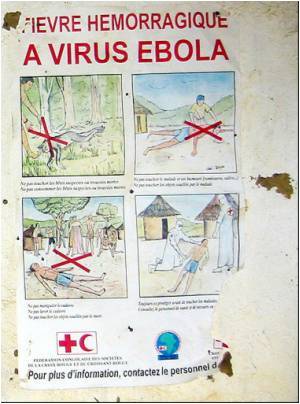
Ebola, classified as filoviridae, is a really brutal virus that has been in the news a lot lately. Known to cause hemorrhagic fevers and be extremely pathogenic and fatal, Ebola still has a lot of unknowns associated with it. Although the mode of transmission is thought to be through direct contact with fluids or tissues from an infected person or animal, virologists are still not completely sure. The only way to prevent a massive outbreak is to isolate all infected individuals. Scientists are not even sure what the vector could be, although many have researched various bat species that reside in areas surrounding previous outbreaks.


When you have Ebola, the endothelial cells of blood vessles, mainly surrounding orifices, weaken and lose the ability to cause coagulation, which is part of the healing process. Eventually, these tissues break down completely, causing bleeding from any (or all) of your orifices. Another website describes the symptoms in gruesome detail, as if reading the liner notes for a black metal album:

"The first symptoms are a low-grade headache. This quickly progresses to a debilitating fever and muscle pain. Then things get truly bad as the major organs, the digestive tract, the skin, the eyes, the gums, all begin to break down and bleed. The body begins to dissolve. Blood pours out of body orifices while the victim writhes in pain. Death usually comes from systemic shock and blood loss. Researchers were shocked when they first autopsied people who died from these fevers. Their insides had literally melted into a necrotic mess of black fluid."

About a year ago, a research scientist in Germany earned international attention because she carelessly stabbed her finger while injecting mice with the Ebola virus for treatment and vaccination experimentation. Luckily, her team immediately went into action, isolated her and treated her with a vaccine that was still in the process of being developed.


Rumor has it that she is alive and well. Oh goody!

Three weeks ago, Ebola made international headlines again when scientists in Boston published research showing an effective cure for Simian (monkey)  Ebola. Their research achieved 100% protection against death after the monkeys were injected with a seriously lethal dose of the virus. This has nothing to do with infected humans, but will lead the way for future research and vaccine development.

I am always fascinated at how tirelessly research scientists work to solve major problems, such as viruses with 90% mortality rates, cancer or Alzheimer's...yet, there is always some idiot that is working to keep the problem going, despite any efforts to fix it.

A perfect example of this is the bushmeat industry. Just today, reporters uncovered a serious threat to the spread of many deadly viruses in Paris due to the weekly importation of bushmeat from monkeys, crocodiles and porcupines. My favorite part of that article is this:

"Madame Toukine, an African woman in her 50s, said she receives special deliveries of crocodile and other bushmeat on weekends. She declined to give her full name, fearing she could be arrested."

Oh yes. I know I engage in potentially deadly trade that is incredibly illegal, but I'll give you my last name and the location of my quaint little bushmeat-slinging shoppe.
Also, this:


"Of 134 people searched, 9 had bushmeat. Another 83 had livestock or fish. But people with bushmeat had the largest amounts: one passenger had 51 kilograms (112 pounds) of it — and no other luggage. Most of the bushmeat was smoked and arrived as dried-out carcasses. Some animals were identifiable, though scientists boiled the remains of others and reassembled the skeletons to determine the species."

Mmm! Nothing gets my salivary glands excited like unidentifiable jungle carcass!


Also, if you have the time, check out this amazing revamping of a classic: Curious George and the Ebola Virus.