I always think its particularly amusing when people who have web comics take a sudden interest in virology or parasitology. Recently, The Oatmeal produced a comic detailing the life of Dicrocoeliasis dendriticum, a liver fluke that has some interesting intermediate host situations.
All-in-all, he does a pretty good job of detailing significant events, but he would have definitely failed an exam on the subject. Sure, being scientifically correct wouldn't be as funny.
Surprisingly, I made it home from my vacation. I say this, because from the moment I booked my flights, I began looking up stuff that could possibly kill me that are specific to Australian territories. My boss tried to scare me (me? really? nice try.) by talking about the deadliest snakes in the world, and constantly looking up photos and youtube videos of the golden orb weaver spider. Unfortunately for her, those types of things don't scare me at all. I, of course, was on a hunt for much...smaller things!
All in all, Australia was a blast! I highly suggest it for anyone who is looking to travel, and travel cheap. Their winter months are from May to November, so not only was tourist season nowhere in sight, so were all the things I wanted to discover. It was too cold for marine stingers (jellies), it was too cold for (most) mosquitoes, and in the end, the scariest thing I was up against was cold/flu season. Disappointing!
In my hunt for deadly pathogens (whilst on vacation, nonetheless), I discovered some interesting facts about Australia's health, as a country, a continent and an island!
It turns out, in 2003, Northern Queensland had an outbreak of Dengue Fever, which survived through the winter months. This is surprising because Dengue Fever is a viral pathogen that is transmitted by mosquitoes as they take bloodmeals from human hosts, who usually only reproduce in the summer months due to the comfortable environmental conditions. Since 2003, Queensland health officials have taken it upon themselves to control Dengue Fever through the use of health education and insecticide sprays to kill any mosquito populations near residential communities.
In 2009, Cairns reported over 900 cases of Dengue Fever. The 2003 outbreak was primarily concentrated in Townsville, which happened to be the first stop on my itinerary.
Queensland coastal cities are known for their beach-town attitude, their easy access to the Great Barrier Reef, and their great weather year round. Apparently, they are also known for their propensity for Dengue Fever outbreaks. If you are interested in epidemiology, here is a nifty table that reports Queensland cities and their infection rates over the past 10 years.
What really is Dengue Fever, you ask?
Dengue Fever is a class IV virus in the Baltimore classifications system, which means its a positive (+), single stranded RNA virus that uses negative (-), single stranded RNA as its intermediate before interacting with the host's mRNA. Don't worry, it's not that difficult. Here, let me explain further:
Paul Ahlquist's article Parallels among positive-strand RNA viruses, reverse-transcribing viruses and double-stranded RNA viruses provides a very nice illustration (see the middle panel, or, b.) of positive-strand RNA viral replication. As you can see, the originally infecting virus (entering at the top) is carrying positive (+), single strand viral RNA. Once that viral RNA is released into the host's cell, it interacts with a series of replication proteins which begins the genomic replication cycle, using the original viral RNA strand as a template. Some negative (-) single stranded viral RNA is created as an intermediate, in order to create more positive (+) RNA.
Dengue Fever is a part of the Flavivirus genus, which also encompasses the West Nile virus, Yellow Fever, and other viruses that can cause encephalitis. Dengue can cause symptoms that are more mild in children than in adults, such as high fever (from 104-105 degrees Fahrenheit, in some cases) with at least two of the following: severe headache, severe eye pain, joint, bone or muscle pain, a rash, low white blood cell count, and a mild bleeding manifestation (from nose or gums, or easy bruising). The joint, bone and muscle pain is said to be so excruciating that it feels as if your bones are literally shattering inside of your skin.
Now, they often monitor Dengue patients closely to see if their symptoms increase in severity. If there is an increase, it can be an indication of Dengue Hemorrhagic Fever (DHF), which can destroy tissues and cause suffering patients to "bleed out" (much like the symptoms of Ebola, as written about here). The more severe symptoms that put patients on a close watch are severe abdominal pain and persistent vomiting, red spots or patches on the skin, bleeding from nose and/or gums, vomiting blood, black and tarry feces, pale, cold and clammy skin, drowsiness and irritability, and difficulty breathing.
Unfortunately, there is no treatment for Dengue or DHF, but there have been advances on how to ease symptoms and decrease the mortality rate for people suffering from DHF.
Dengue Fever is rare in the United States and other non-tropical areas, but there have been minor outbreaks in the past. In the past few months, an outbreak surfaced in Key West, FL, infecting 28 people. Here is an interview with one of the women who was affected. In this article, the CNN reported writes about Rick Branch, a U.S. Navy officer stationed in Key West, who was among the first cases to be confirmed after the woman in the article. The reporter has the interest to write about Rick's symptoms and experiences, but leaves some major points out. Check it out:
"It felt kind of like a hangover -- though I wasn't drinking the night before," [Rick] says. "I had a foggy head. I was a little bit tired."
Three hours later, Branch was freezing cold and had a fever. By Tuesday his joints were getting sore, and by Wednesday the pain was excruciating. "I could barely walk straight because the joints hurt so bad," he recalls. "They don't call it breaking-bones for nothing."
He had also developed a rash, and by Thursday his gums were bleeding. "I was hemorrhaging," he says."
Ok, that's all normal reporting. Symptoms, personal quotes. Let's ask Rick what he did about it, right?
"Although Branch and his wife had looked up his symptoms on the Internet and began to suspect dengue fever, it wasn't until he was flown to Miami and saw four doctors there that dengue fever was seriously considered."
So, Rick took his own health seriously, and went and did his research. Granted, the internet doesn't always give you the right information, but if you are using credible sources, then its a worthwhile effort. Rick suspected it was Dengue Fever and due to its rarity in the area, the doctor's dismissed the idea.
For some reason, that truly bothers me. I have had this very situation (well, minus the Dengue), and I was misdiagnosed and shuffled out of the doctor's office with a nice pat on the head. I'll be the first to admit, I am a total hypochondriac, but in a curious way that has always had good intentions. I expect my doctor's to work with me, not assume I'm an idiot, and I'm sure Rick would have appreciated the same courtesies. When it comes down to it, Rick could have died if his hemorrhaging was not taken seriously. Luckily, he didn't.
NO WAY! Are you kidding me? This article makes me want to repeatedly slam my head in a door.
"When a Palm Beach County family was plagued by a swarm of little black mosquitoes, county mosquito chief Ed Bradford knew to look for Aedes aegypti hiding in the house.
"They were in the Waterpik," Bradford said. "The family hadn't used it in a while, I guess, and there was a little water left in it."
A Broward County family had Aedes in their bottled water system. Another had them in the overflow tray under a refrigerator water dispenser, said Broward mosquito biologist Evaristo Miqueli."
Seriously? in your WaterPik? Thank you, Miami Herald, for another great piece of journalism.
Step one to avoiding Dengue Fever: clean your house.
Its summer, the weather is warm, and everyone I know is taking off for a vacation or two (including myself! but I'll get to that later). Well, everyone except for the teenagers and little children that are practically living in the pool that's located right across the way from my windows. No, they aren't going anywhere. In fact, they are letting the whole neighborhood know that they wont be leaving by playing marco-polo what seems like 24 hours a day! I'm getting so used to hearing blood-curdling screams and shrieks coming from outside that if someone was actually being murdered, I might accidentally mistake it for children in the pool and take no action. Someone should tell those children that they are the reason people are dying. That, and that they should shut up.
I digress.
I'm always trying to find topics for this blog that are relevant to my life or current events. Not only does it make it easier for me to choose, but maybe it'll also give you a little insight to what my life is like as well... not that that is the reason you're reading this or anything. Even though science is one of the most egotistical communities, science is about the subjects itself, not the scientists themselves.
(As I typed that sentence, I had a brief flashback to my physics course in college. The very ancient professor was absolutely obsessed with Einstein, and spent most of the class telling us about him as a person, instead of his works. That professor died a few weeks after the quarter ended. I don't believe in anything having to do with religion, but I hope Dr. Good (or his atomic makeup) is somewhere in the universe, hanging out with Einstein, just how he always wanted.)
So, the relevance of this topic is a bit obscure, but hey, that's what science is all about! A new friend of mine leaves for a never-ending backpacking trip, beginning in Iceland, tomorrow. A very close friend of mine leaves for Hawaii tomorrow, and later in the summer is packing up and moving to Sweden. One of my cutest friends will be studying abroad in Germany soon. Some of my friends are on a two month tour through Europe with their band, Comadre. And I, lastly, leave for my short vacation to Australia in less than two weeks. After all this year has thrown at me, the ups and downs, I simply cannot wait to...well..get out. It's winter in Australia right now, and I cannot be more excited about that. That, and well, anything.
With all the stories of traveling, I've decided to dedicate this entry to all my friends and their future explorations by writing about infestations.
Cute!
I've been receiving periodic updates from my friends that are currently gallivanting around the world, all while I select and book my accommodations, and a thought came to mind. Hotels, hostels, buses, random sheets, unwashed clothing and close quarters. Do we know what we're rolling around on? Or rather, what could be crawling around on, embedding itself in, and defecating all over us? Let me tell you about two of my favorites.
Bed bugs are found practically worldwide. There are so many different subfamilies within the genus that they are easily spread regionally. Bed bugs are parasitic, nocturnal and hematophagus, meaning they feed on blood, typically of warm-blooded animals. In collecting their blood meal, they use two separate feeding tubes; one to inject saliva containing anticoagulants and anesthetics, and the other to collect the host's blood. Is it just me, or do they sound like tiny vampires?
Bed bugs are also very homophobic. They fertilize females through very violent copulation, essentially piercing the female with its genitalia. Since this is, what I assume to be, a very painful process, the males go to great lengths to avoid any sexual confusion, and secrete an "alarm pheromone" that is used to signal other males in case one accidentally tries to sexually assault another male.
Bed bugs can, and do, feed on humans. After feeding, the site of the bite becomes inflamed, due to action of the inflammatory response to try to heal the wound and avoid infection. The bites can become very itchy, and the wounds are typically torn open through scratching, increasing the probability of secondary infection. Bed bugs infest entire households, and are fond of fabrics, such as bed sheets, upholstered furniture and dark places.
Scabies, or Sarcoptes Itch Mites, are very tricky little parasites. Scabies mites cause intense itching for many reasons. Initial infestation begins when an impregnated female burrows into the host's skin and lays eggs. The actual burrowing and movement under the skin can cause itching, even though the mites are rarely seen due to their size. Burrows can often be seen on the surface of the skin:
Infestation is usually located in folds or crevices of skin, such as in between fingers, on the underside of the wrist, underarms, under the fold of the breast and butt. Scabies is also classified as a common sexually transmitted disease because it can infest genital areas and can be passed through sexual contact.
Once the female has laid her eggs, they hatch 3-5 days later, and the infestation spreads to other areas of the host's body. The collection of eggs under the skin can cause itching, too, as well as the direct contact with the mite's fecal matter, as most individuals are allergic to it. Much like Bed Bugs, Scabies burrows are very itchy and cause an inflammatory response from the host. The host often tears the wound open through intense scratching, and a secondary infection can occur.
Scabies is spread through direct skin contact with an infested person, sharing bedding. Initial symptoms of severe itching, primarily at night, will usually occur two weeks to a month after contact with the infested person or bedding. Scabies mites spread very easily and rapidly, which means all individuals in a household or shared living space must be treated at the same time. This will eliminate risk of reinfestation.
I've decided to stop there since its very easy to get carried away with ectoparasites, and I don't want to completely freak my friends out and ruin their trips. The next time you are planning a trip somewhere, sharing a bed with someone, or sitting on your not-so-hygienic friend's couch, think about the fun things that can infest your skin.
On a side note, one of the places I'll be traveling to has a sea monster! Looks like I'll be spending my entire vacation doing research and waiting to see this 30 foot thing! Exciting!
Not only am I a horrible blogger (shh, I know!), but...well...
I'm obsessed with Ebola.
Now, let me back up a few steps and tell you why:
Infectious diseases are my "thing". They've always fascinated me, in the ways that they affect their hosts, in their genius, evolutionary design, and in their strength. When I first learned about Ebola, I was in the Stanford morgue with my biology teacher. I was a freshman in high school, and was the only person in my class that could handle the trip. My teacher didn't doubt that, either. Not only was I the only freshman in the class, but I was getting the highest grade. She might have also thought I would have been interested in going since I was a suburban punk with an open fascination for all things morbid and macabre.
My future in science was sprawled out in front of me, sliced open exposing the internal environment of what you could associate that feeling after you accidentally sleep with your mouth open all night: pooling liquids, stressed tissues and an attractive browning in color. These are all minor details in this story, but I'm sure you can forgive me for indulging in such memories.
During the first autopsy review, I asked what the most interesting cause of death was that they had seen to date. Obviously, no one had died from Ebola in suburban-chic Palo Alto, but a laundry list of infectious diseases was recited.
Fast forward to many years later. Not so much outwardly punk rock anymore (forever at heart, though!), I sit in my Virology class in college, amorously listening to lectures about some of the world's deadliest things. Sure, I knew about Ebola by then, through scientific papers and trashy dramatizations of science, but it was only after those lectures that I truly knew I was obsessed.
Since then, my candid crush on Ebola has ruined a number of dates, relationships and any hope that I had (actually never) had to be considered somewhat normal. So what if I am fascinated with something that has killed tons of people!?
Yea, ok. I get it. I probably should not be on the internet, professing my lust and admiration for a virus. But I did. Lets get to the point, shall we?
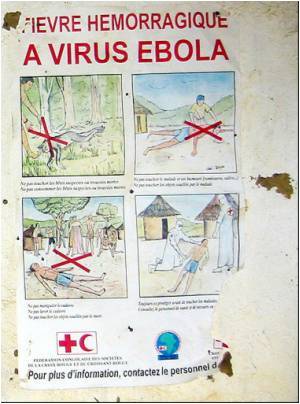
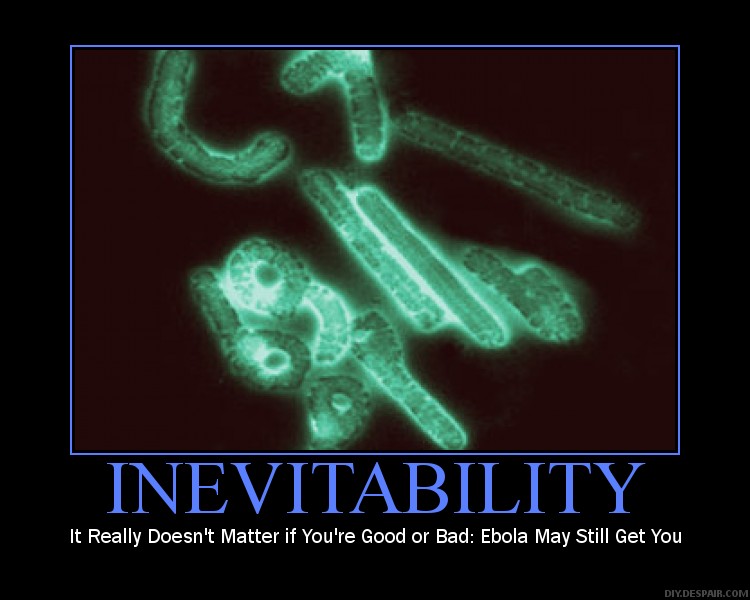
Ebola, classified as filoviridae, is a really brutal virus that has been in the news a lot lately. Known to cause hemorrhagic fevers and be extremely pathogenic and fatal, Ebola still has a lot of unknowns associated with it. Although the mode of transmission is thought to be through direct contact with fluids or tissues from an infected person or animal, virologists are still not completely sure. The only way to prevent a massive outbreak is to isolate all infected individuals. Scientists are not even sure what the vector could be, although many have researched various bat species that reside in areas surrounding previous outbreaks.
When you have Ebola, the endothelial cells of blood vessles, mainly surrounding orifices, weaken and lose the ability to cause coagulation, which is part of the healing process. Eventually, these tissues break down completely, causing bleeding from any (or all) of your orifices. Another website describes the symptoms in gruesome detail, as if reading the liner notes for a black metal album:
"The first symptoms are a low-grade headache. This quickly progresses to a debilitating fever and muscle pain. Then things get truly bad as the major organs, the digestive tract, the skin, the eyes, the gums, all begin to break down and bleed. The body begins to dissolve. Blood pours out of body orifices while the victim writhes in pain. Death usually comes from systemic shock and blood loss. Researchers were shocked when they first autopsied people who died from these fevers. Their insides had literally melted into a necrotic mess of black fluid."
About a year ago, a research scientist in Germany earned international attention because she carelessly stabbed her finger while injecting mice with the Ebola virus for treatment and vaccination experimentation. Luckily, her team immediately went into action, isolated her and treated her with a vaccine that was still in the process of being developed.
Rumor has it that she is alive and well. Oh goody!
Three weeks ago, Ebola made international headlines again when scientists in Boston published research showing an effective cure for Simian (monkey) Ebola. Their research achieved 100% protection against death after the monkeys were injected with a seriously lethal dose of the virus. This has nothing to do with infected humans, but will lead the way for future research and vaccine development.
I am always fascinated at how tirelessly research scientists work to solve major problems, such as viruses with 90% mortality rates, cancer or Alzheimer's...yet, there is always some idiot that is working to keep the problem going, despite any efforts to fix it.
A perfect example of this is the bushmeat industry. Just today, reporters uncovered a serious threat to the spread of many deadly viruses in Paris due to the weekly importation of bushmeat from monkeys, crocodiles and porcupines. My favorite part of that article is this:
"Madame Toukine, an African woman in her 50s, said she receives special deliveries of crocodile and other bushmeat on weekends. She declined to give her full name, fearing she could be arrested."
Oh yes. I know I engage in potentially deadly trade that is incredibly illegal, but I'll give you my last name and the location of my quaint little bushmeat-slinging shoppe.
Also, this:
"Of 134 people searched, 9 had bushmeat. Another 83 had livestock or fish. But people with bushmeat had the largest amounts: one passenger had 51 kilograms (112 pounds) of it — and no other luggage. Most of the bushmeat was smoked and arrived as dried-out carcasses. Some animals were identifiable, though scientists boiled the remains of others and reassembled the skeletons to determine the species."
Mmm! Nothing gets my salivary glands excited like unidentifiable jungle carcass!
My apologies if this post has a mild bitter after-taste.
As most of you know, I've been working really hard on a research project. Unfortunately, mere months before I would have finished, UCSF was published on the same topic...only, its UCSF, meaning they did it better! This is in no way uncommon in the world of scientific research, but still, you can imagine my surprise, shock, and large chip adorning my shoulder.
Overall, I am incredibly proud to be involved in such a field. (this is me trying to see the silver lining) The positive results in this research could very well revolutionize the direction of HIV research from here on out. In the end, its not about who discovered and published what, but who we are helping. The scientific community can be, well, cut-throat more often than not, and this calloused look at the publishing arena totally discredits the entire reason we are (or should be) doing this research. So, I applaud you, UCSF and the amazing research team that finished this project.
When I get my hands on an appropriate link to the published article, or at least an abstract, I will post it here for your reading enjoyment.
So, its back to the drawing board. But, that also means that I'll have more time to write ridiculous entries until I formulate my new research proposal. Yay!
Given that the research was on HIV, I figure I'll take this post to fill you in on the basics of the virus itself.
I was recently in my local Trader Joe's, enduring an awkward conversation with my checker who was also attempting to ask me out on a date (while wearing a utili-kilt...but that's another story), and he inquired about my involvement in scientific research. I basically told him that I currently work with HIV, and he admitted that, although he was aware of HIV and what it did, he had no idea what the acronym stood for. I told him to guess, and he was only lucky enough to get V. Close, but no cigar, my kilted friend...
Human Immunodeficiency Virus is quite the amazing and quizzical issue.
Above is a basic illustration of HIV in its collective structures. As you can see, its an enveloped virus, which means it has a lipid based structure that encapsulates the genomic information that actually "creates" the virus. Various envelope proteins stud the lipid envelope and assist with viral entry (but we'll get there in a second). Within that lipid envelope, a viral capsid (or, another fancy encasing) holds the viral RNA (two copies of positive single stranded RNA, or (+) ssRNA). The viral RNA encodes for structural proteins once it has integrated into the host's genome, and gives way to replication.
HIV is a retrovirus, giving it a baltimore classification of VI. Retroviruses are truly amazing, and when they were first discovered , they were completely mind blowing. Retroviruses have the ability to create DNA from RNA with the assistance of Reverse Transcriptase (which is encased in the viral capsid, too). This allows the virus to integrate (with the assistance of Integrase molecules, also included in the viral capsid) into the host (our) DNA. This will reprogram the production information, causing our own cells to produce copies of the virus. This is brilliant, and horrible. In a paper in high school, I related this to a viral trojan horse.
So, before HIV can replicate, it must gain entry into our T-cells. The envelope proteins gp120 and gp41 (meaning "glycoprotein" followed by the molecular weight) interact with our chemokine receptors, and initiate membrane fusion between the viral envelope and the T-cell membrane. This creates a tunnel for the viral capsid to travel to the host's cytoplasm, and uncoating occurs. This leaves the viral RNA and its associated functional molecules to get to work. Reverse Transcriptase creates viral DNA in the host's cytoplasm, and Integrase leads it to the host nucleus, where it is integrated, and spliced into smaller viral genomic copies. These copies encode for the viral proteins and are trafficked out of the nucleus, towards the host's cell membrane, where the new viral RNA will bud. Infection continues, rapidly.
HIV has been very tricky and hard to nail down in terms of treatment and a vaccine, but the more we understand about its life cycle, the more things we are able to target for said treatment. Each time the virus replicates, it has the opportunity to make mistakes, or mutations. If the mutations are severe enough, that particular viral strand will not be able to replicate. But, most minor mutations go unnoticed. These constant mutations are the reason HIV is hard to nail down.
About 6 months ago, a three-year vaccine trial ended in Thailand with an almost 40% success rate. This is incredible, but not anywhere near where we need to be to go into mass production.
I know, this is a lot to swallow all at once, so I'll continue this bit at a later date.
In the mean time, do yourself a favor and take steps to protecting yourself from an incurable virus.
I've been working on my next post, but won't be able to finish it until after the weekend, as I have to attend a wedding and participate in copious amounts of "family stuff".
Until then, I'll leave you with the awesome new post from Natalie Dee:
I'm sure I'm the one that found that funny. I'll shut up now.
I know, I know, I touched on malaria in my last entry. But, World Malaria Day is tomorrow, April 25th.
Malaria is one of the most prevalent and debilitating diseases that is currently affecting our species. A lot of scientific advancements have come into fruition because our struggle with battling malaria. Since its World Malaria Day, I’ll tell you a little bit about the background and history of malaria.
Most people assume malaria is a disease that is only concentrated in Africa or some tropical regions of Asia, but that is not the case. In 1937, there were over 1 million cases of malaria in the United States, and it currently affects people in hundreds of countries. Malaria cases were eradicated from the United States over 50 years ago, but more than 40% of the world’s population is at risk. Although over 90 percent of malaria cases today are in sub-Saharan Africa, it affects the entire world.
Many people don’t give malaria the credit it deserves for being such a horribly intelligent and sneaky parasite. Some historical epidemiologists believe that malaria played an important hand in the fall of ancient Greek and Roman empires. In medieval times, many expeditions were not wiped out by the wars they were engaged, but by malaria infections instead. During the Vietnam war, battle wounds were the most prevalent reason for hospitalization; Malaria was the second.
In 1955, the World Health Organization proposed to eradicate malaria worldwide through the use of dichlorodiphenyltrichloroethane, or DDT. Their efforts began with routine house spraying, and “bombing” areas of high infectivity or environments that were conducive to mosquito breeding. The emergence of drug resistance, widespread resistance to available insecticides, wars and massive population movements, difficulties in obtaining sustained funding from donor countries, and lack of community participation made the long-term maintenance of the effort untenable. Completion of the eradication campaign was eventually abandoned to one of control.
According to the Malaria No More organization, malaria kills an African child every 30 seconds. In 2008, an estimated 863,000 people died of malaria Although these facts and statistics may make it seem so, a malaria infection and diagnosis is not a death sentence. Malaria is definitely a treatable and curable disease.
Twitter has joined up with Malaria No More and other organizations for World Malaria Day and has set up a program where you can donate $10 with every retweet you send out. Check it out here.
Also note, the World Health Organization just announced on April 23rd:
Rapid diagnostic malaria tests will help health workers quickly identify which patients have the disease and need immediate treatment. This will allow malaria to be properly diagnosed before treatment.
I encourage you to take a moment and think about how you have screens on your windows, access to anti-malarial drugs, and don’t need to sleep under a net to ensure your survival.


 S
S